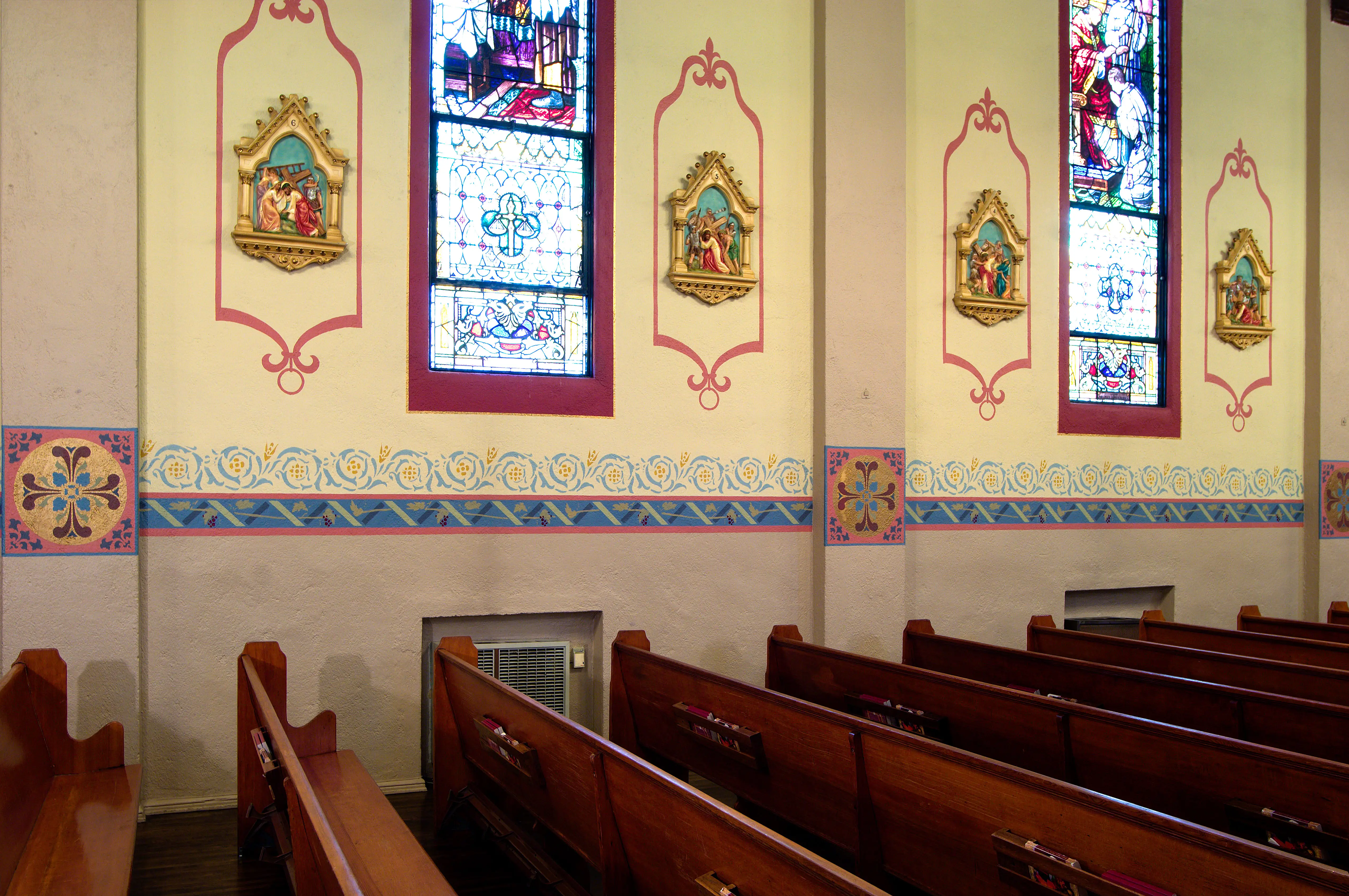
Decorative painting, chinoiserie & grisaille
Hand-painted ornament, hand-cut stencil borders, chinoiserie panels and tonal grisaille — the decorative vocabulary that gives a room structure without adding furniture.
Decorative painting is the oldest branch of the trade and the most useful. It organises a room. A border at dado height gives a long wall a datum; a painted cartouche turns an object into an event; a run of ornament along a vault gives a ceiling a rhythm that plain colour never will.
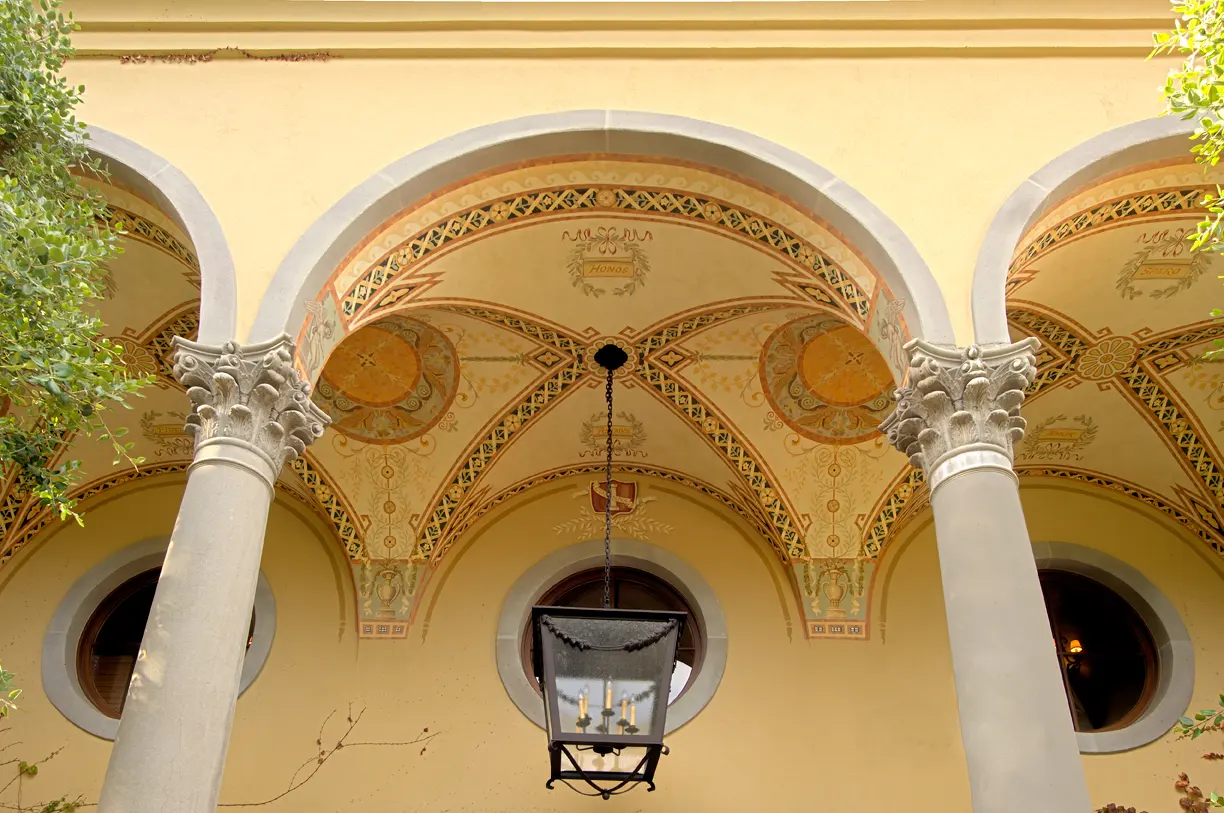
Everything we do here is hand work. Stencils are cut for the specific job and pounced by hand, which leaves a slightly soft, slightly variable edge — the difference between a wall that reads as painted and one that reads as papered. Ornament is drawn, not decalled.
The studio covers the full historical vocabulary: chinoiserie, grisaille, arabesque and grotesque ornament, stencilled borders, painted panelling, heraldry and lettering, and ecclesiastical decoration.
Decorative Painting in place
How the work is done
Every stage below exists because skipping it shows up later, usually expensively.
- 01
Scheme design
We work out where the decoration goes and, more importantly, where it stops. Restraint is the design decision that makes the rest work.
- 02
Motif development
Motifs are drawn to the room — scaled to the wall, the repeat set out so it turns corners and meets openings without an awkward part-repeat.
- 03
Stencil cutting
Stencils are cut by hand for the job. Multi-plate stencils are registered so each colour drops precisely into place.
- 04
Ground preparation
Grounds are laid, glazed or leafed as the scheme requires. Chinoiserie in particular is transformed by what is underneath it.
- 05
Application
Stencilled elements first to establish the structure, then hand-painted ornament, then highlights and gilded accents.
- 06
Toning
Finally the whole scheme is knocked back and unified so that no single element shouts.
Chinoiserie
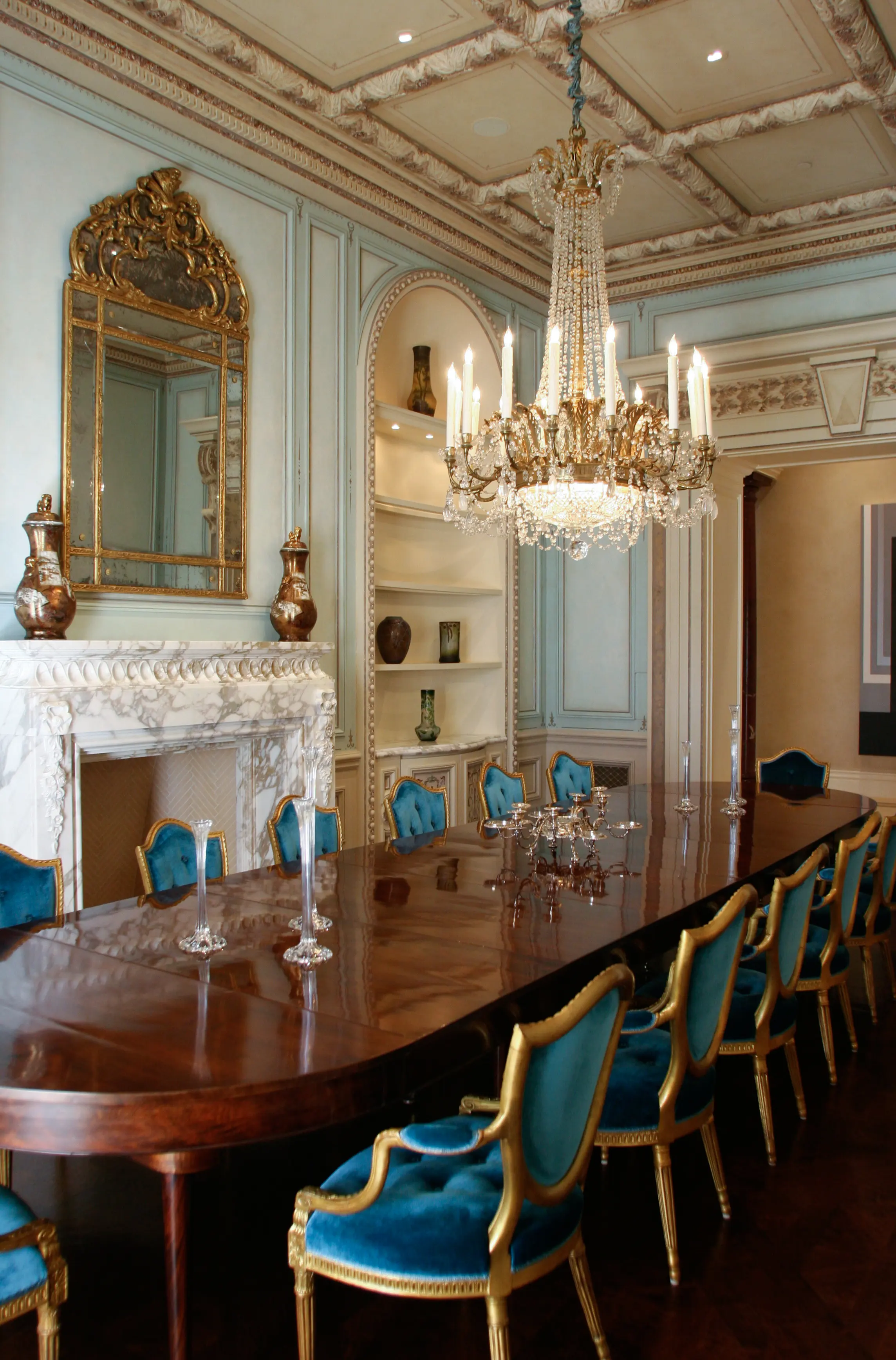
Chinoiserie is a European decorative style — not a Chinese one — that grew out of the seventeenth-century trade in East Asian goods and interprets their motifs through a European decorative grammar: flowering branches, birds, pavilions, bridges, small figures, all held in an asymmetrical composition on an open ground.
It is transformed by its ground. Painted on tinted gesso it is delicate and papery; on silver or gold leaf it becomes something else entirely, catching light behind the painting so that the branches appear to float. We paint both, panel by panel, so the composition can be resolved across a whole room rather than repeated.
Grisaille
Grisaille is painting in shades of a single colour — historically grey, hence the name — used to imitate carved stone relief and sculpture. It was the workhorse of European decoration for centuries because it delivers the impression of architectural enrichment at a fraction of the cost of carving it.
It remains the most economical way to give a flat wall or ceiling genuine apparent relief, and it sits comfortably in contemporary interiors where full polychrome ornament would be too much.
Ecclesiastical decoration
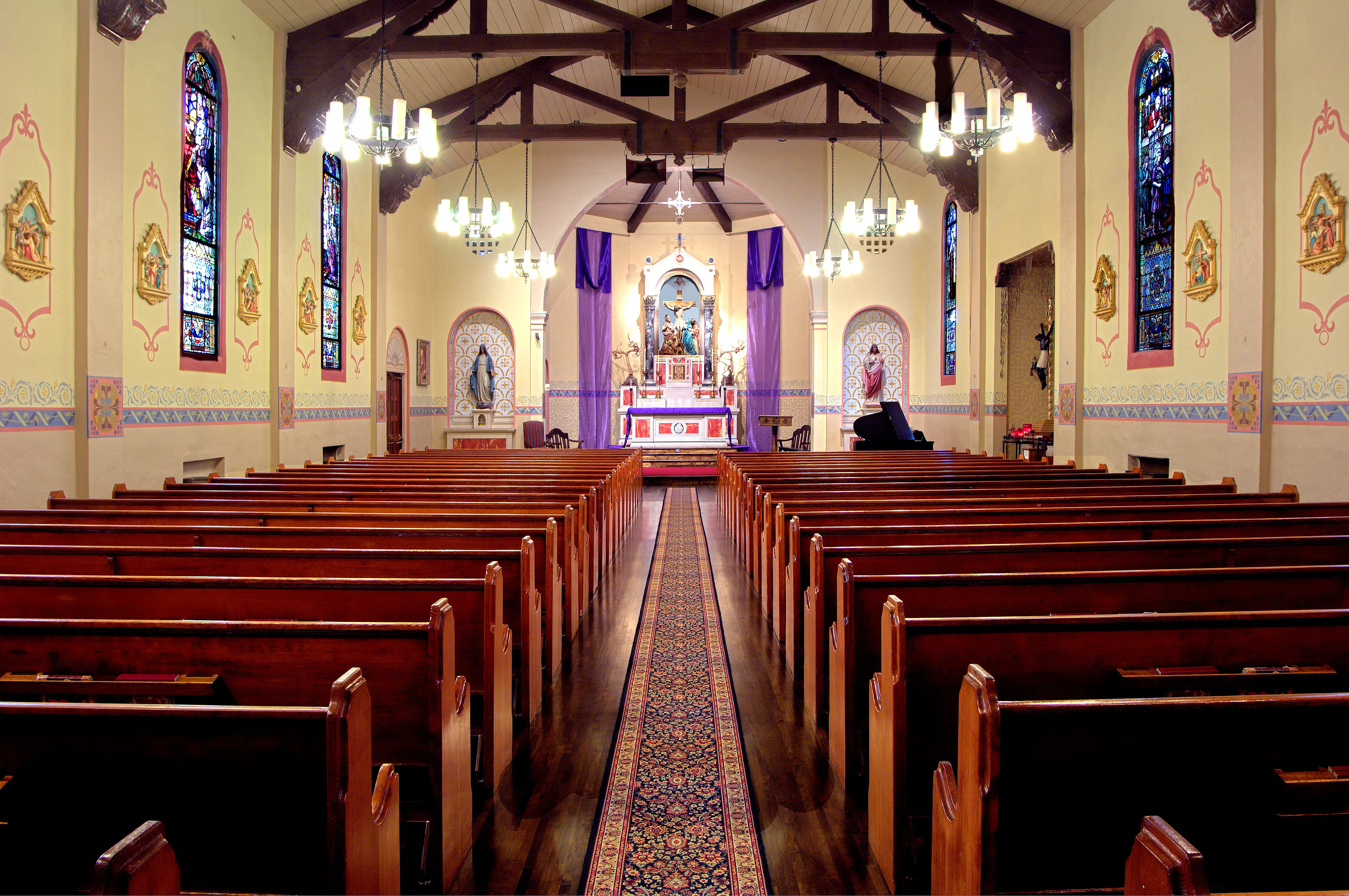
Church decoration has a job beyond ornament: it has to organise a long, tall room so the eye is carried to the sanctuary, and do it for a congregation seated at a fixed distance under artificial light.
We have worked on Catholic, Baptist and Latter-day Saint buildings, on both new schemes and the restoration of existing ones, and we are used to working with parish committees and diocesan offices around a live liturgical schedule.
Common questions
What is decorative painting?
It is the hand-painted enrichment of architectural surfaces — borders, ornament, panelling, glazed and broken-colour finishes, painted relief — as distinct from both flat painting and easel painting.
What is chinoiserie?
A European decorative style, popular from the late seventeenth century, interpreting Chinese and East Asian motifs through a European decorative vocabulary. Hand-painted chinoiserie is typically worked on a tinted or metal-leafed ground.
What is grisaille painting?
Painting executed entirely in shades of grey or another single colour, historically used to imitate carved stone relief. It is still the most economical way to give a flat surface apparent architectural depth.
Do you use hand-cut stencils?
Yes. Stencils are cut for each job and pounced by hand. The slight irregularity that produces is exactly what distinguishes a painted wall from a printed one.
Projects using this work
Related services
Gold Leaf & Gilding
Water and oil gilding in gold, silver and composition leaf — ceilings, ornament, signage and furniture.
Mural Painting
Hand-painted interior and exterior murals for homes, churches, theatres and civic buildings across Los Angeles.
Historic Restoration & Art Conservation
Paint investigation, historic colour designation, consolidation and in-painting for landmark interiors.
Tell us about the room.
Every commission begins with a conversation about the space, the light and what it needs to do. Consultation and site assessment are available for projects across Greater Los Angeles.