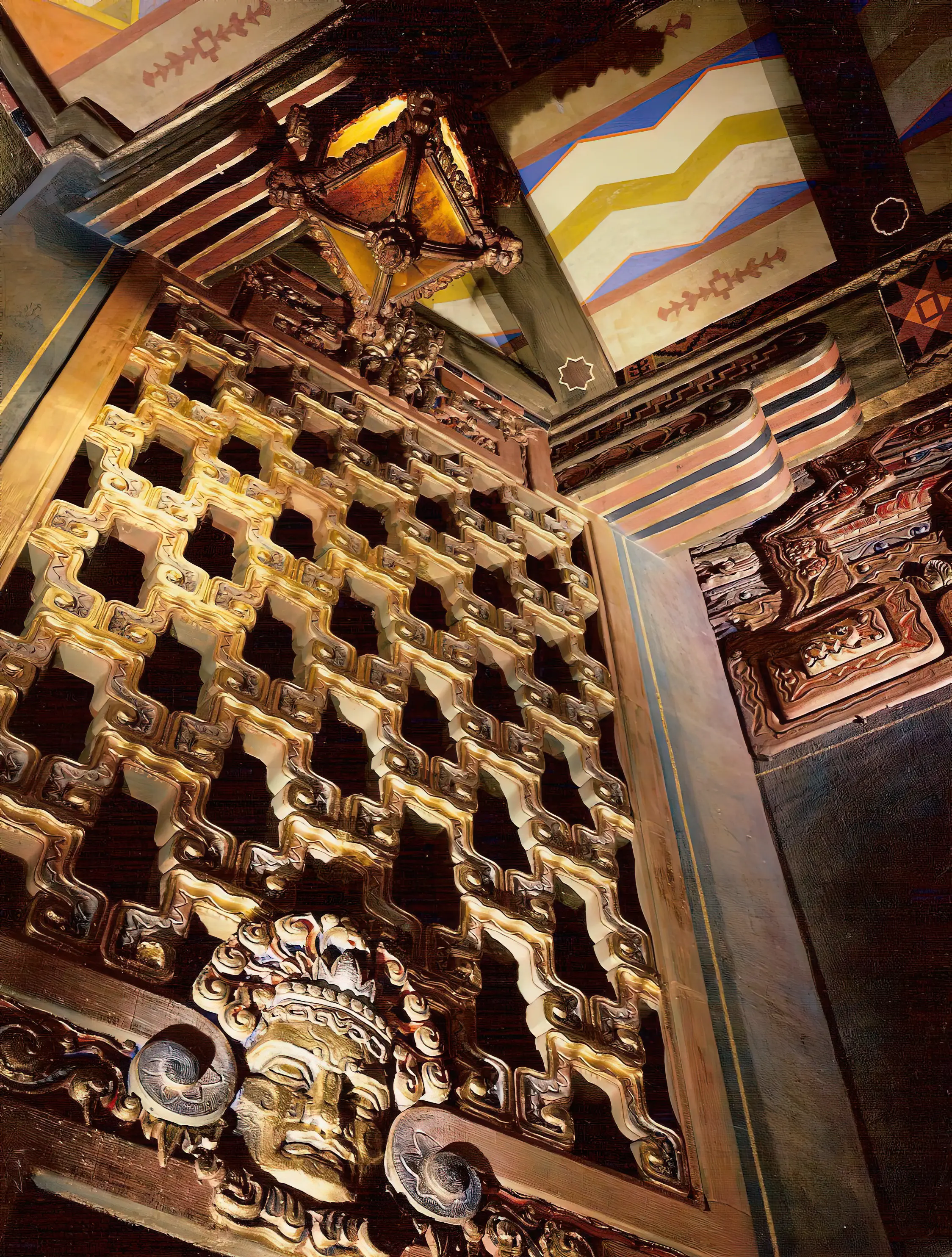
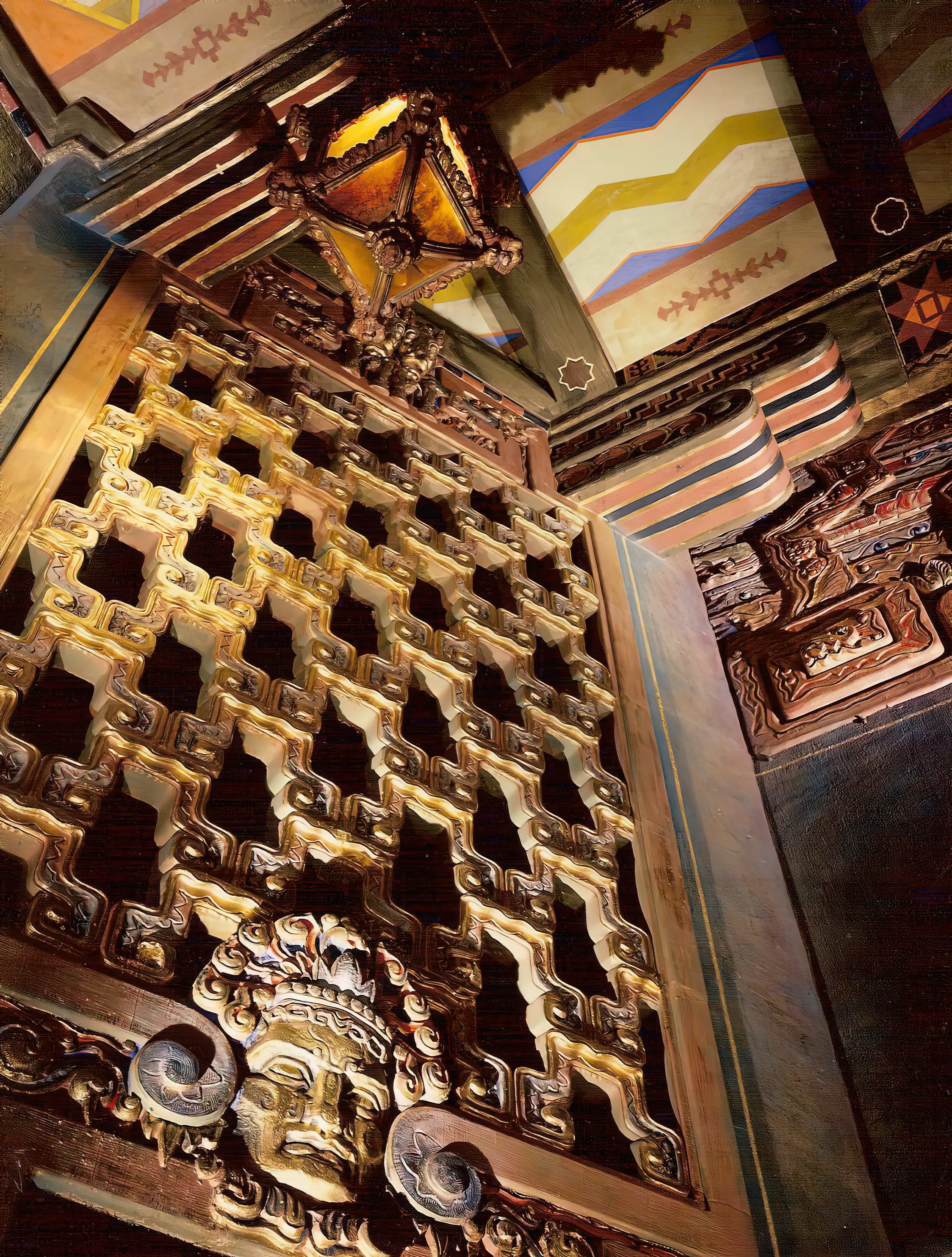
Gold leaf & gilding
Genuine gold, silver, palladium and composition leaf, laid by hand in water and oil gilding — on ceilings, mouldings, carved ornament, furniture, signage and sacred fittings.
Gold leaf is about one ten-thousandth of a millimetre thick. It will not hide anything. Every ripple, every tool mark, every imperfection in the ground beneath it is transmitted straight through to the surface — which is why gilding is judged almost entirely on the preparation nobody ever sees.
We gild by both traditional methods. Water gilding, over gesso and bole, is the only technique that can be burnished to a true mirror finish, and it is what serious frames, sacred fittings and fine furniture require. Oil gilding, over an oil or acrylic size, is more robust, works on site and outdoors, and is the right choice for architectural runs, exteriors and signage.
We also restore existing gilding — a very different job from new work, and one where the difficulty is not laying the leaf but making it agree with the hundred-year-old gold beside it.
Gold Leaf & Gilding in place
How the work is done
Every stage below exists because skipping it shows up later, usually expensively.
- 01
Substrate and ground
Surfaces are made good and grounded. For water gilding that means multiple coats of gesso, cut back between coats, then bole. The ground is where the finish is actually made.
- 02
Sizing
Size is laid and brought to the correct tack. The window is narrow — too wet and the leaf drowns, too dry and it will not hold. On a large run this is a timing exercise across the whole surface.
- 03
Laying the leaf
Leaf is picked up on a gilder’s tip and laid, with a deliberate overlap at every joint. Faults are patched immediately while the size is still live.
- 04
Faulting and burnishing
Excess is swept away and the surface is either burnished with an agate to a mirror (water gilding) or left at its natural sheen (oil gilding).
- 05
Toning and glazing
New gold is unnaturally bright. Where it must sit beside old work, it is glazed and toned by hand until the two read as one surface.
- 06
Sealing
Genuine gold does not tarnish and is often left unsealed. Silver, composition leaf and any exterior work are sealed against oxidation.
Water gilding vs. oil gilding
Water gilding is laid over a gesso and bole ground with water as the adhesive. It can be burnished with an agate stone to a genuine mirror, and it can be selectively burnished so that some passages gleam and others stay matte within the same object. It is not water resistant and it is not suitable for exteriors.
Oil gilding is laid over a size and cannot be burnished, but it is far more durable, can be applied to almost any substrate, and works outdoors. Architectural gilding, exterior domes, lettering and signage are all oil gilded.
On most projects we use both — oil gilding for the runs, water gilding for the pieces that need to gleam.
Restoring existing gilding
The hard part of gilding restoration is not the gold. It is matching. Aged gold has a specific colour, sheen and surface irregularity that fresh leaf simply does not have, and an untoned repair reads as a bright patch from across the room.
We re-leaf only where the original is beyond recovery, then glaze and tone the new work in stages until it disappears into the surrounding surface at the intended viewing distance.
Common questions
Is real gold leaf expensive?
The gold itself is a surprisingly small part of the cost — leaf is beaten extraordinarily thin. Labour and preparation dominate the price, which is why a properly prepared composition-leaf job can cost more than a poorly prepared genuine-gold one.
What is the difference between gold leaf and composition leaf?
Genuine gold leaf is gold and will never tarnish. Composition leaf (also called Dutch metal or imitation leaf) is a brass alloy; it is much cheaper, and it will oxidise unless sealed. For interiors with a sealed finish it can be an entirely reasonable choice.
Can gold leaf be used outdoors?
Yes — 23kt genuine gold, oil gilded, is the standard for exterior domes, weathervanes and signage and lasts for decades. Silver and composition leaf should not be used outdoors.
Do you gild furniture and frames?
Yes, including water-gilded and burnished restoration of period frames and furniture.
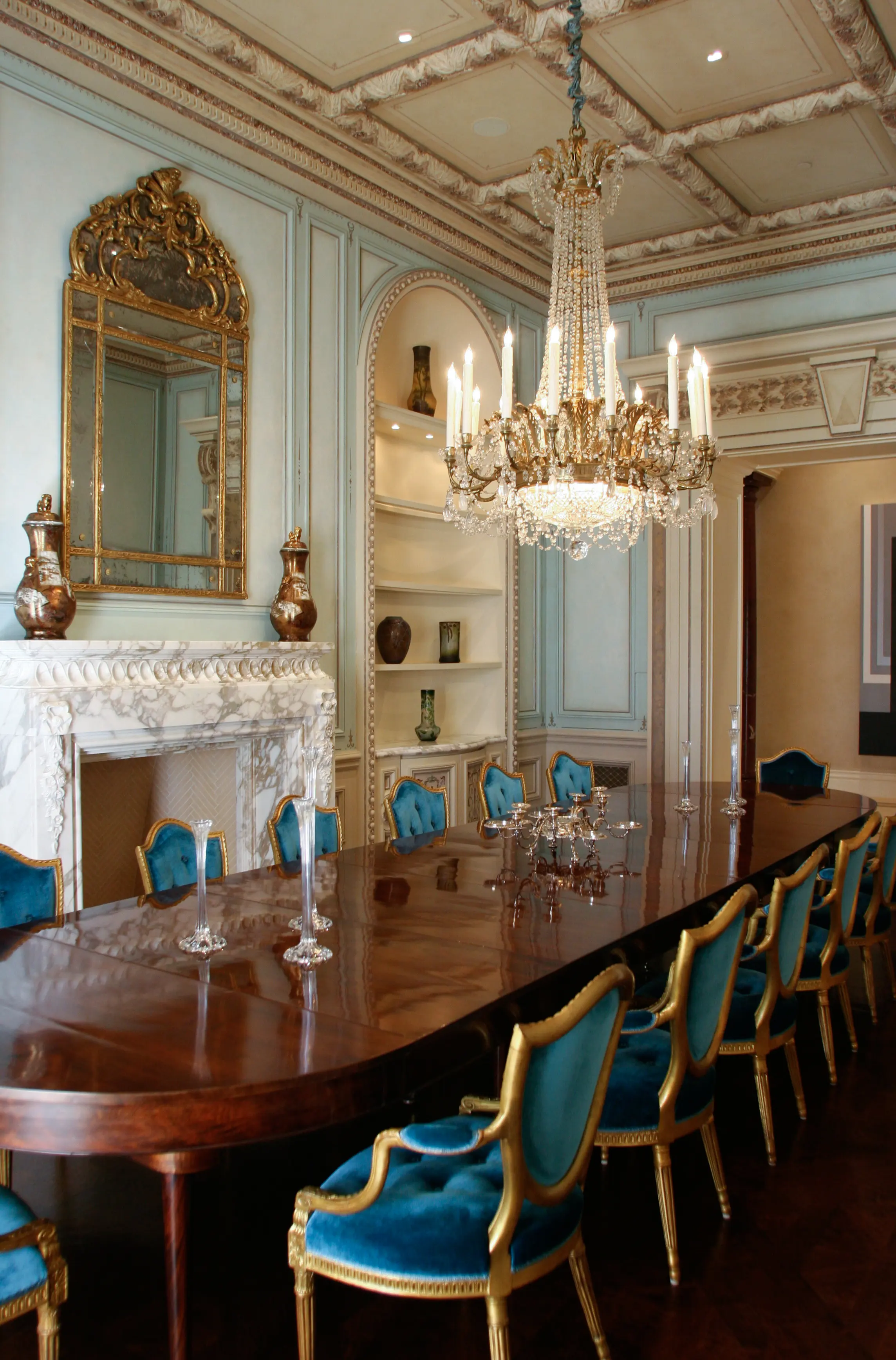
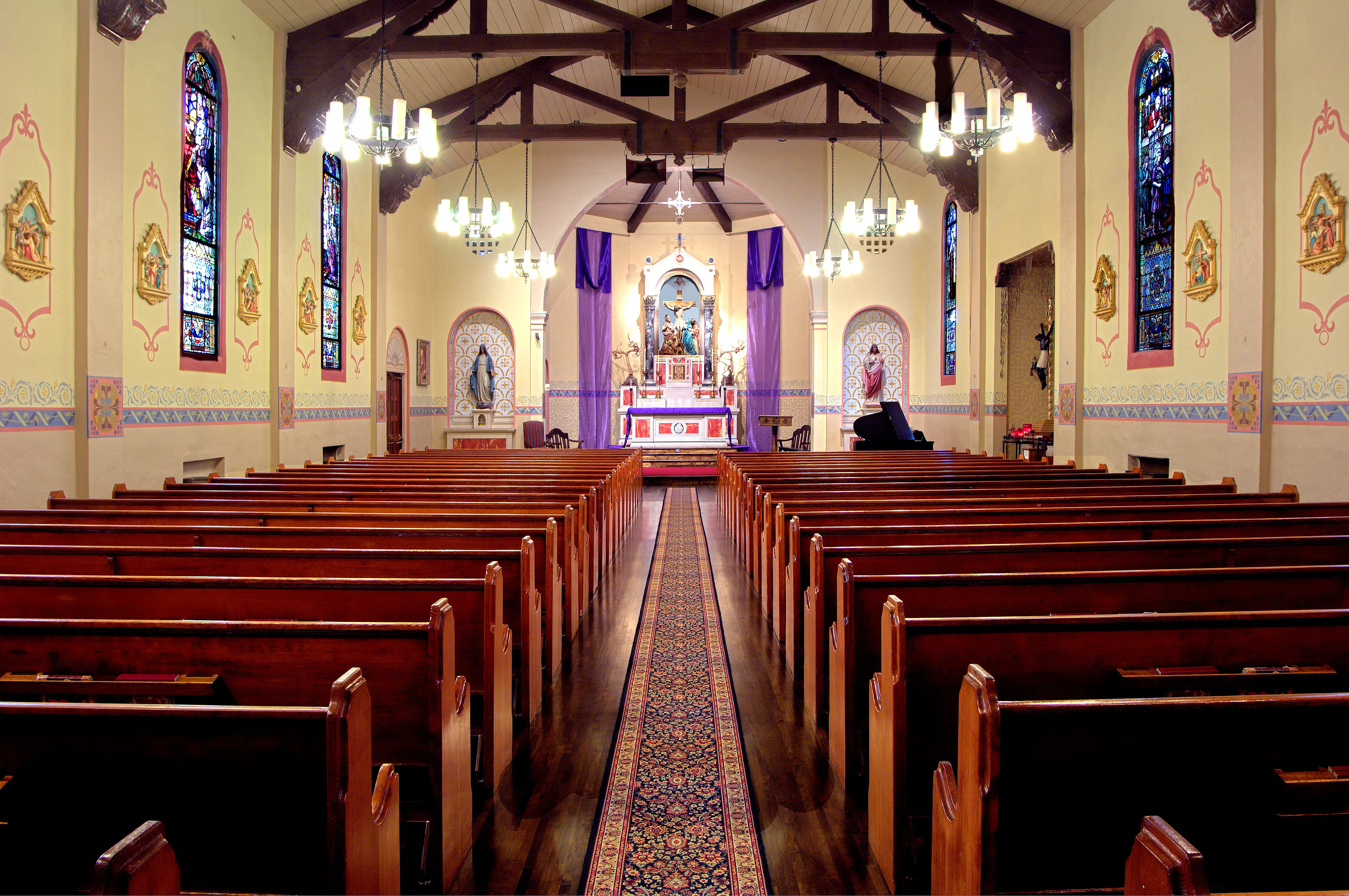
Projects using this work
Related services
Historic Restoration & Art Conservation
Paint investigation, historic colour designation, consolidation and in-painting for landmark interiors.
Decorative Painting, Chinoiserie & Grisaille
Hand-painted ornament, stencilled borders, chinoiserie panels and tonal grisaille for period interiors.
Faux Finishes, Faux Bois & Faux Marble
Faux marble, faux bois graining, metallic patinas and custom wood treatments matched to existing material.
Tell us about the room.
Every commission begins with a conversation about the space, the light and what it needs to do. Consultation and site assessment are available for projects across Greater Los Angeles.