Trompe l'oeil painting
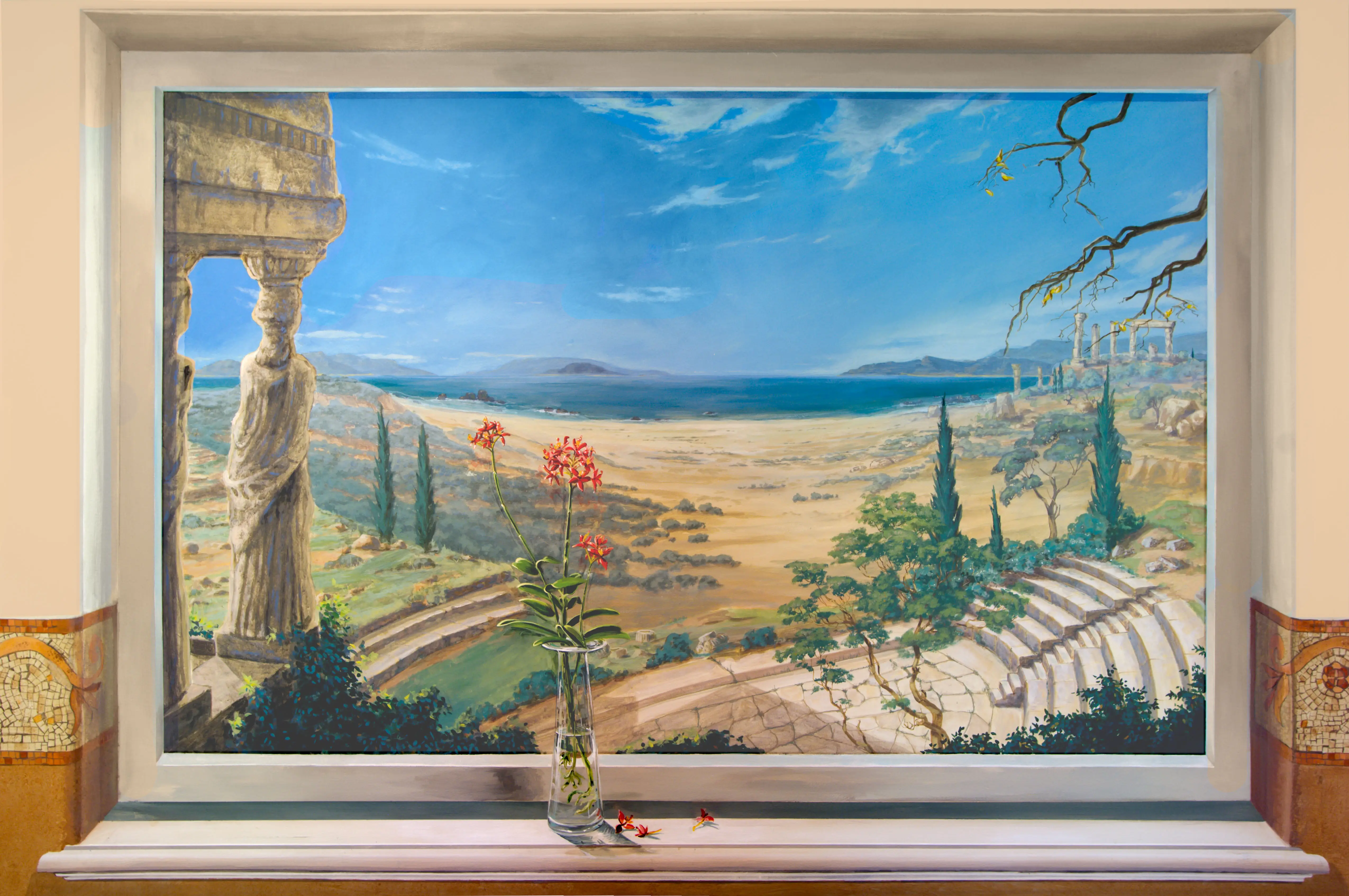
Painted architecture, false windows, niches, panelling and vistas — built to the light already in the room, so the eye accepts them before the mind catches up.
Trompe l'oeil means 'deceives the eye'. The deception is not produced by draughtsmanship, and it is not produced by detail. It is produced by shadow.
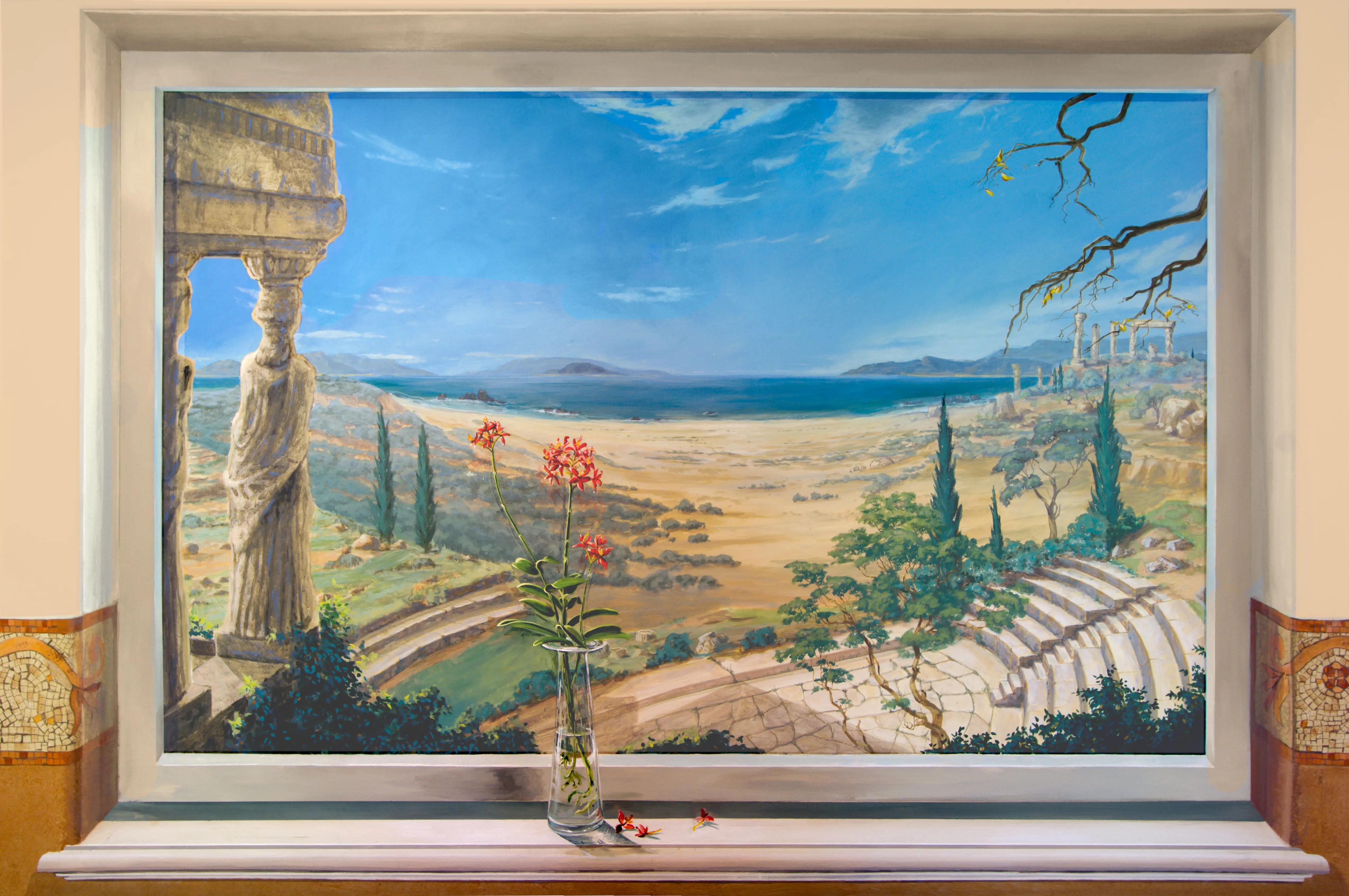
A painted window works when its shadows agree with the real light in the room — when the reveal darkens on the correct side, when the sill casts at the same angle the real windows are casting, when the horizon sits where a real horizon would sit for someone standing at that spot. Get those right and quite modest painting will hold. Get them wrong and the finest brushwork in California will not save it.
Because of that, this work is measured before it is drawn. We record the light sources, the standing eye level, the distance the piece is approached from, and where a viewer stops. Everything else follows.
Trompe l'Oeil in place
How the work is done
Every stage below exists because skipping it shows up later, usually expensively.
- 01
Light and viewpoint survey
We record every light source in the room, natural and artificial, and fix the eye level and approach path. This determines the perspective construction and the shadow scheme.
- 02
Perspective construction
The architecture of the illusion — frame, reveal, sill, mouldings — is constructed geometrically to that single viewpoint, not sketched.
- 03
Colour study
A scaled study establishes the subject and, critically, the value range. Illusion lives or dies on values, not on hues.
- 04
Underpainting
The architectural elements are painted first and made convincing on their own before any view is added behind them.
- 05
The view
The scene beyond is painted last, keyed down in contrast so that it sits behind the plane of the wall rather than on it.
- 06
Shadow reconciliation
The final pass is spent walking the room at different times of day and adjusting shadows until nothing disagrees with the real light.
Where it works best
Trompe l'oeil earns its keep where a room is missing something it ought to have: a windowless powder room, a dead end at the top of a stair, a blank chimney breast, a corridor with nothing to look at.
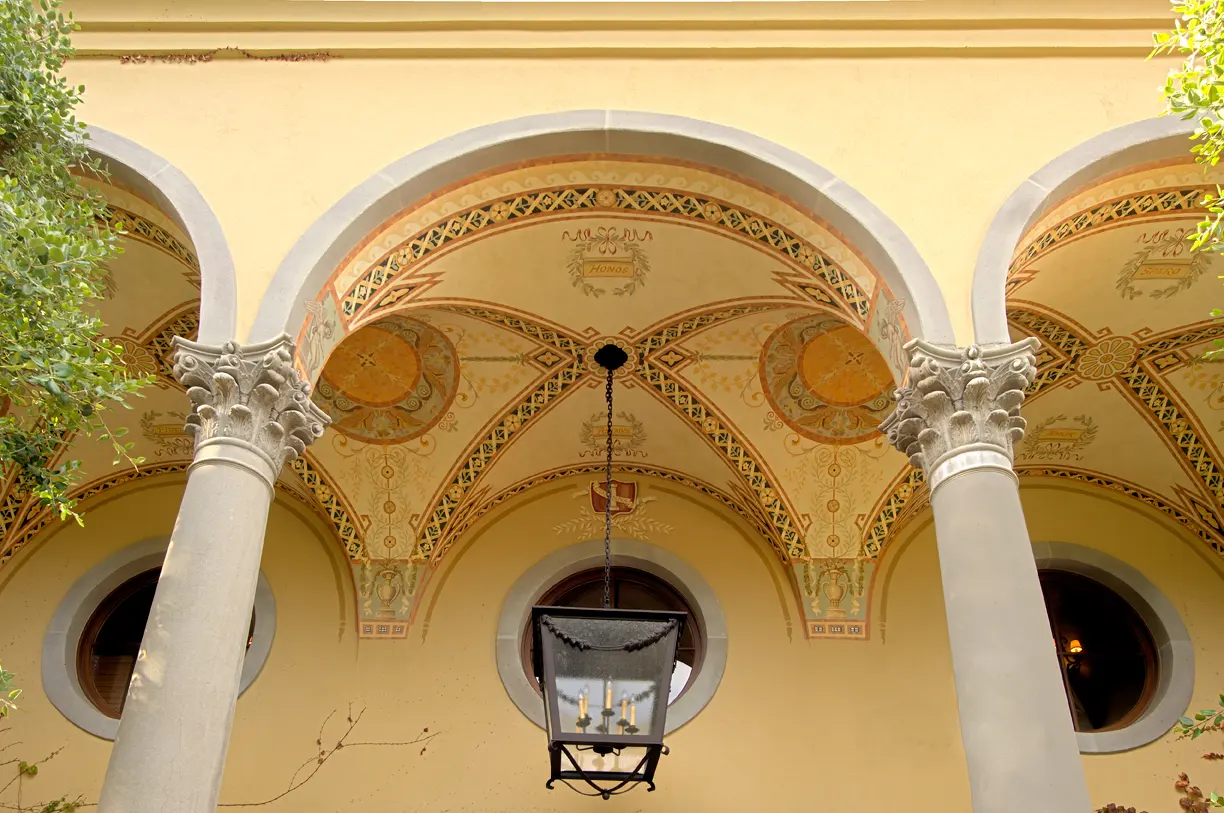
It works badly where the viewer will approach from many angles at once, or stand right against the wall, because a single-viewpoint construction cannot survive both. In those rooms we would usually propose painted architecture — panelling, niches, mouldings — which holds from any angle.
Restraint
The most common failure in this discipline is excess. Every additional element is another chance for something to disagree with the light, and a viewer only needs to catch one error to stop believing the whole thing.
The best pieces are usually quiet: one opening, one convincing object, a great deal of care spent on the edges nobody consciously looks at.
Common questions
What is trompe l'oeil?
Trompe l'oeil is French for 'deceives the eye'. It describes painting intended to be mistaken for a real object, opening or architectural feature rather than recognised as a picture of one.
How is trompe l'oeil different from a mural?
A mural is any painting made for a wall and may be openly pictorial. Trompe l'oeil specifically aims to be mistaken for reality, which imposes strict constraints on perspective, scale and lighting.
Does it only work from one spot?
A full illusionistic opening is constructed to one viewpoint and is strongest from there, though a well-built one holds over a generous approach path. Painted architecture — niches, panelling, mouldings — reads correctly from anywhere.
Does it suit a contemporary interior?
Yes, usually in a quieter register: a continued moulding run, a painted niche, a single false opening. Not every commission has to be a Mediterranean landscape.
Projects using this work
Related services
Mural Painting
Hand-painted interior and exterior murals for homes, churches, theatres and civic buildings across Los Angeles.
Decorative Painting, Chinoiserie & Grisaille
Hand-painted ornament, stencilled borders, chinoiserie panels and tonal grisaille for period interiors.
Faux Finishes, Faux Bois & Faux Marble
Faux marble, faux bois graining, metallic patinas and custom wood treatments matched to existing material.
Tell us about the room.
Every commission begins with a conversation about the space, the light and what it needs to do. Consultation and site assessment are available for projects across Greater Los Angeles.