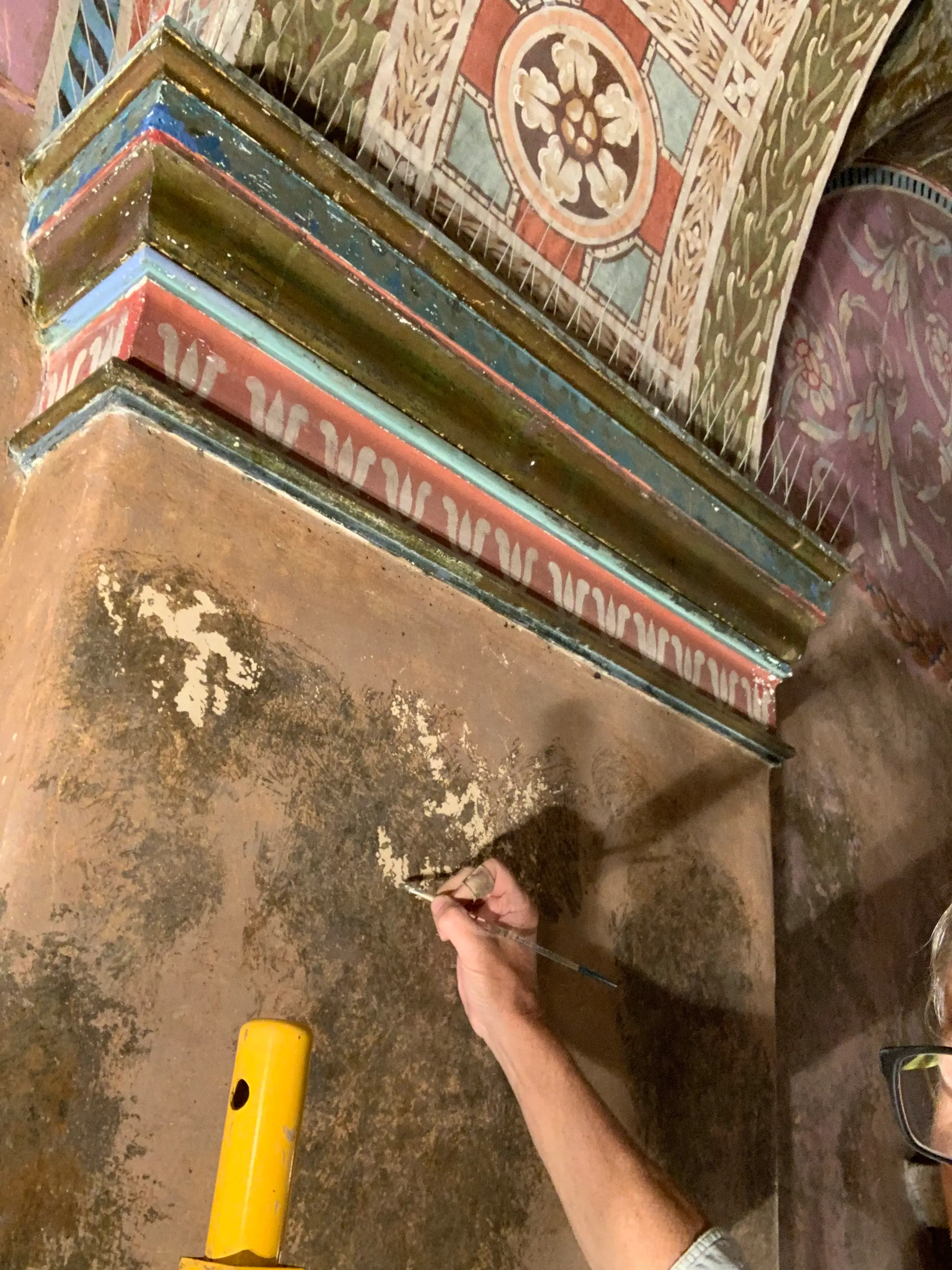
Historic restoration & art conservation
Paint investigation, historic colour designation, consolidation and in-painting for churches, theatres, civic landmarks and period houses — evidence first, paint second.
Restoration and redecoration are frequently sold as the same service. They are not. Redecoration produces a room that looks old. Restoration produces the room that was actually there, and it can only be done by reading the building.
Evan LeGrande Wilson has worked in conservation and historic colour designation for nearly thirty years, on Catholic parishes, a Mormon temple, theatres, a mission playhouse, municipal buildings and private landmarks. The studio also offers consultation on its own — advice, investigation and a specification you can hand to whoever does the work.
The governing principle is minimum intervention. We remove as little as possible, add as little as possible, keep everything we add reversible, and confine new material to areas of genuine loss so that surviving original work stays legible as original work.
Historic Restoration in place
How the work is done
Every stage below exists because skipping it shows up later, usually expensively.
- 01
Condition survey
The whole surface is examined and mapped: flaking, delamination, water ingress, previous repairs, structural movement. Nothing is treated until the cause of the damage is understood.
- 02
Paint investigation
Exposure windows are cut in a controlled grid down through the paint history. Each layer is recorded, photographed in place and numbered so findings can be checked independently.
- 03
Historic colour designation
Exposed layers are matched to a colour standard under controlled light, correcting for the yellowing of aged binder. This is what turns a sample into a specification.
- 04
Consolidation
Loose and flaking material is stabilised before any cleaning begins. Cleaning an unstable surface destroys it.
- 05
Cleaning
Dry methods first, then the mildest effective solvent, tested area by area. Different materials in the same scheme are treated separately — gilding, distemper and oil will not tolerate the same method.
- 06
In-painting and reintegration
Losses are filled and in-painted with reversible materials, kept within the boundary of the loss. New work is toned so it does not announce itself, but remains identifiable to a conservator.
Why investigation comes first
The single most expensive mistake in historic work is choosing colours from a photograph, a memory or a paint deck. Aged varnish yellows, distemper chalks, and a hundred years of soot shifts everything warm. A scheme reconstructed from appearance is almost always wrong, and it is wrong in a way that cannot be undone cheaply.
Exposure windows cost a fraction of a repaint and settle the question. They also frequently find things nobody expected — an earlier scheme under a later one, stencilling under a flat coat, or evidence that a "original" feature was added in 1955.
Working in a building that is still in use
Parishes hold services. Theatres have a season. Civic buildings have staff in them. Almost all of our restoration work is phased around a live schedule, with containment, dust control and daily reinstatement built into the programme rather than bolted on.
We are comfortable working nights and closed periods, and we are used to committees, diocesan offices, landmark commissions and grant reporting requirements.
Consultation without the contract
Not every building needs us to do the work. Some need to know what they have, what condition it is in, and what a responsible scope would be — before they can raise the money or brief a contractor.
We offer consultation and investigation as a standalone service, priced accordingly, on the principle that good intentions are not always matched by the level of expertise available to act on them.
Common questions
What is historic paint analysis?
It is the controlled examination of a surface's paint history — cutting exposure windows or taking cross-section samples so each successive layer can be identified, recorded and matched. It establishes what colours and finishes a building actually had, rather than what it is assumed to have had.
Is restoration reversible?
Good restoration is. We use materials and methods chosen so that future conservators can undo our work without harming original fabric. That constraint rules out many quicker, cheaper approaches.
Do you work on churches?
Frequently. Past ecclesiastical clients include Holy Spirit Catholic Church, St. Andrew's Catholic Church, St. Charles Borromeo Catholic Church, Los Angeles Second Baptist Church and the Los Angeles Mormon Temple.
Can you just tell us what we have?
Yes — investigation, condition assessment and written specification are available as a standalone consultation.
How is restoration priced?
Investigation and survey are quoted as a fixed fee. Treatment is quoted after the survey, because until the surface has been examined nobody can honestly price the work.
Related services
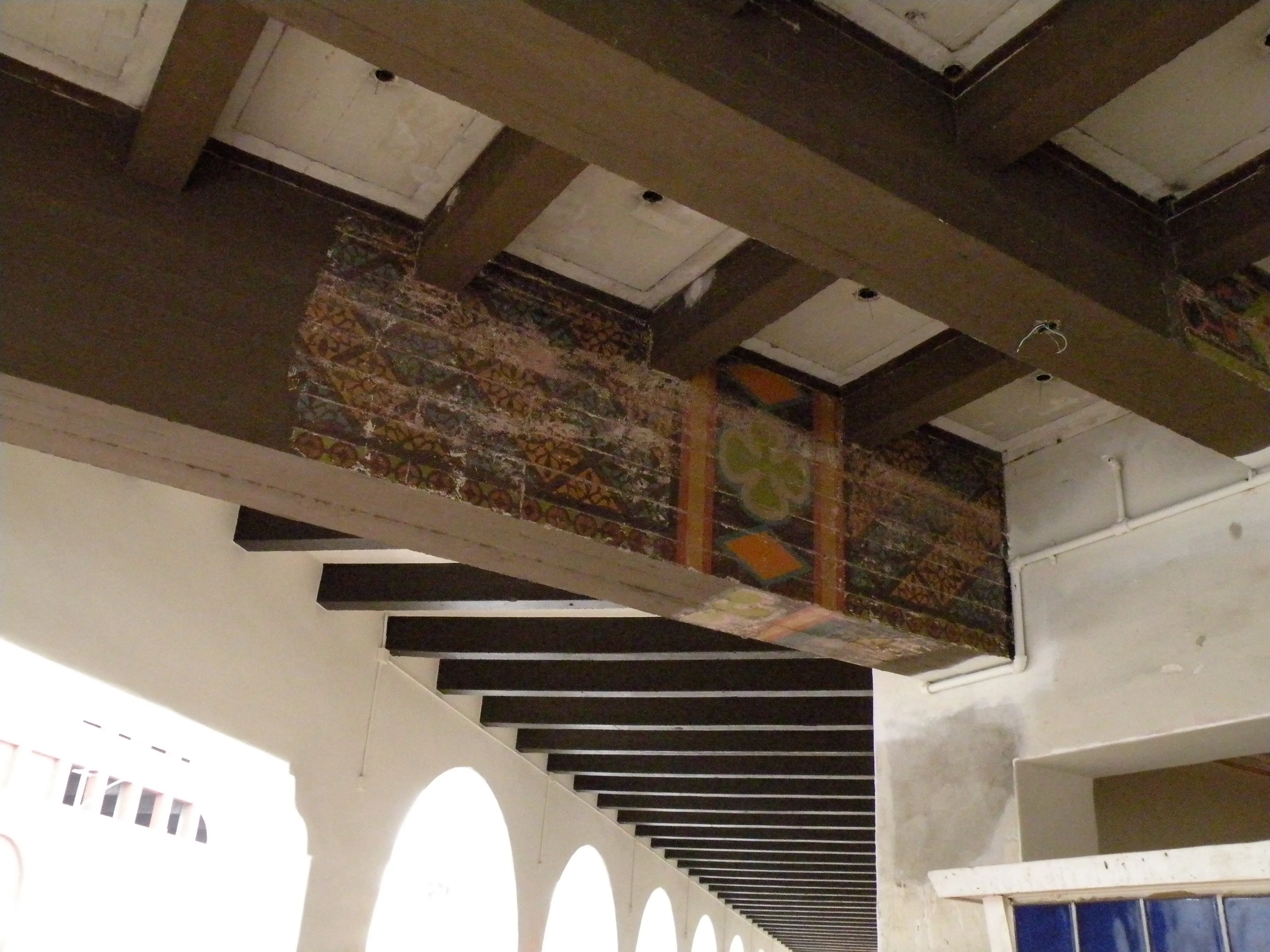
Gold Leaf & Gilding
Water and oil gilding in gold, silver and composition leaf — ceilings, ornament, signage and furniture.
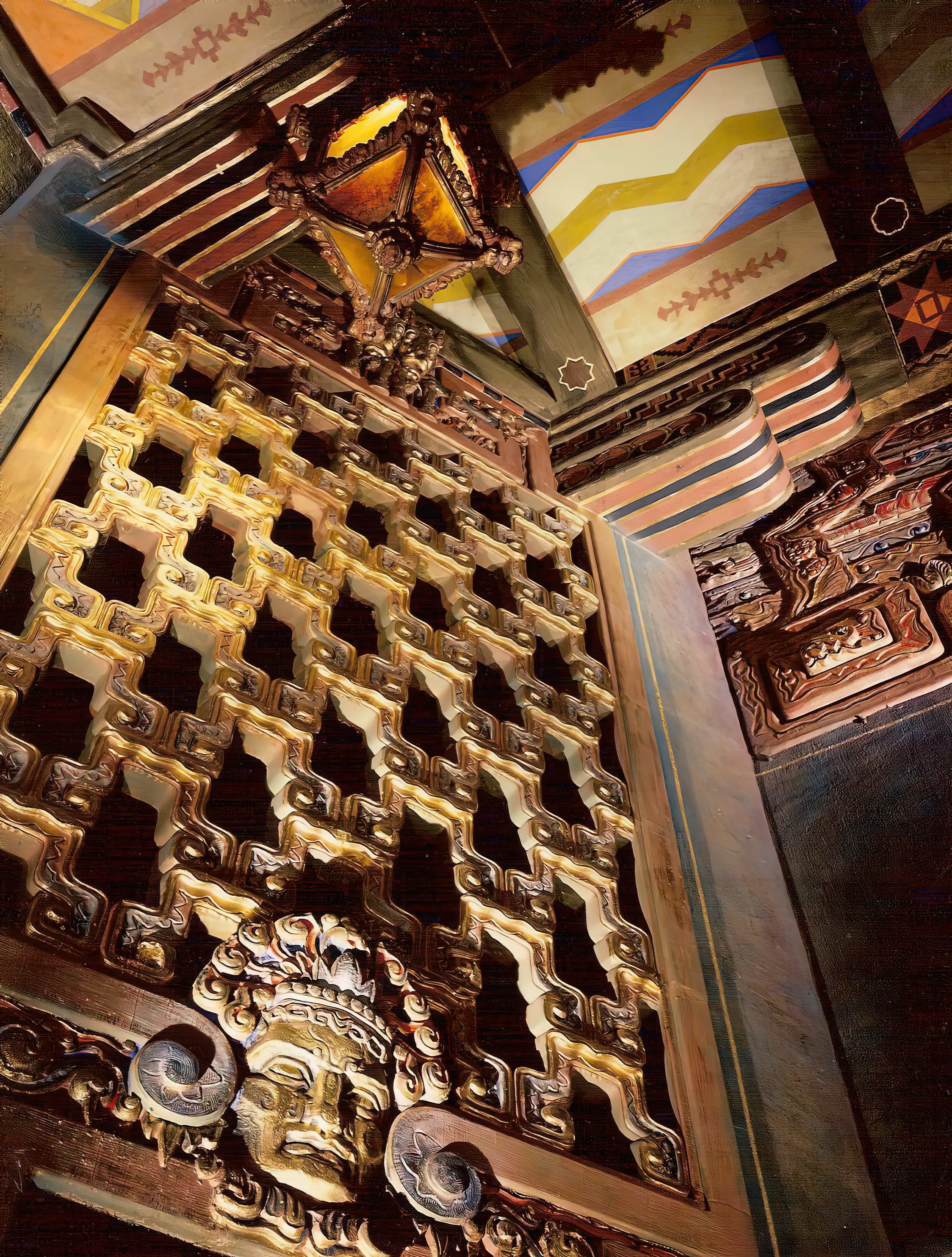
Decorative Painting, Chinoiserie & Grisaille
Hand-painted ornament, stencilled borders, chinoiserie panels and tonal grisaille for period interiors.
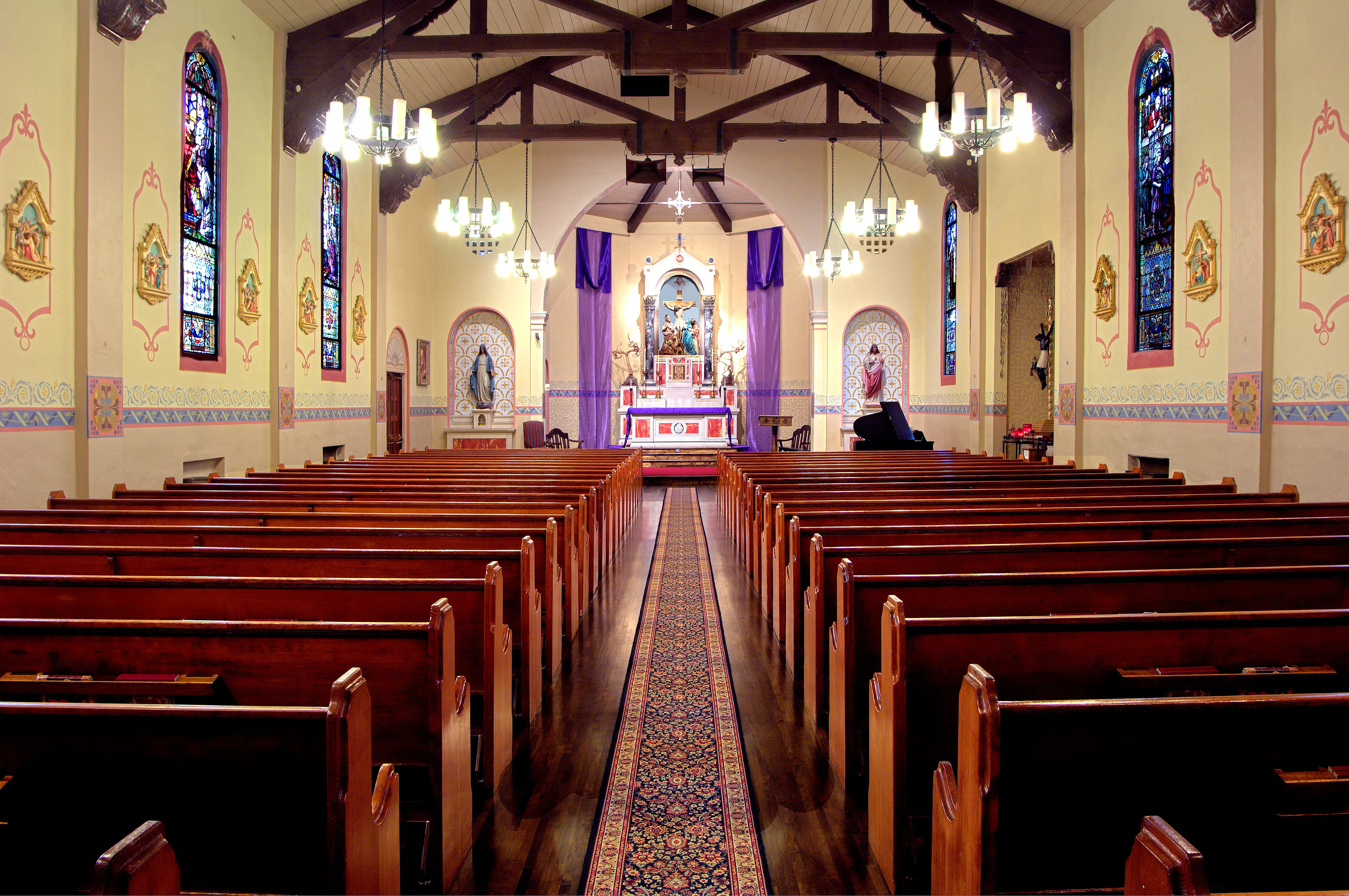
Mural Painting
Hand-painted interior and exterior murals for homes, churches, theatres and civic buildings across Los Angeles.
Tell us about the room.
Every commission begins with a conversation about the space, the light and what it needs to do. Consultation and site assessment are available for projects across Greater Los Angeles.