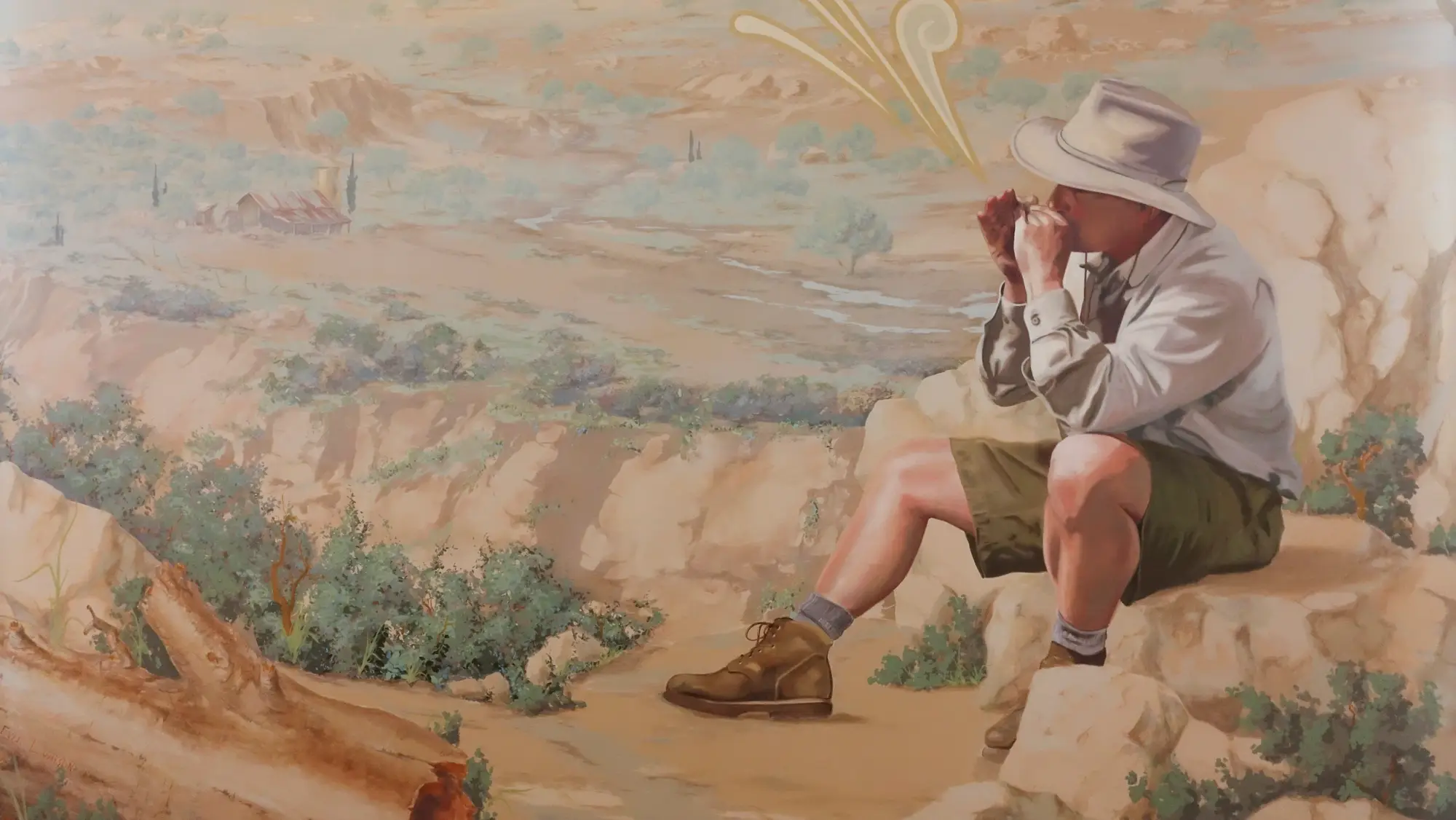
Mural painting in Los Angeles
Hand-painted murals designed for one wall, one light and one viewing distance — for private houses, churches, theatres, libraries and civic buildings across Los Angeles County.
A mural is not a large picture that happens to be on a wall. It is a piece of architecture that has been painted, and it either belongs to the room or it fights it.
Every commission starts on site, at the distance the finished work will actually be seen from. A mural read from six feet away in a powder room needs different handling from one read from the back of a nave at eighty feet. Value contrast, edge quality, scale of detail, even the choice of subject are decided by that measurement before a brush is picked up.
We paint murals directly to the wall and on canvas for installation, in interiors and on exterior elevations, in every register from full illusionistic landscape to quiet decorative panel. Evan LeGrande Wilson has been painting them in Southern California for three decades, for clients including the County of Los Angeles, the San Gabriel Mission Playhouse and parishes across the archdiocese.
Murals in place
How the work is done
Every stage below exists because skipping it shows up later, usually expensively.
- 01
Site visit and measurement
We look at the wall in the light it actually has, at the times of day it matters. Sightlines, viewing distance, ceiling height, artificial light temperature and existing finishes are all recorded.
- 02
Concept and colour study
You receive a scaled colour study — not a stock rendering — showing the composition in place. This is where the design gets argued about and settled, while changes are still cheap.
- 03
Substrate preparation
The wall is assessed, repaired, sealed and grounded appropriately. More murals fail from bad preparation than from bad painting.
- 04
Cartoon and layout
The design is drawn out full size on the wall. We draw rather than project wherever the composition allows: a drawn cartoon can be adjusted to the actual wall, and a projected one cannot.
- 05
Painting
Painted in place, in layers, stepping back constantly to the real viewing distance. On a large mural this is the longest phase and the one that cannot be compressed.
- 06
Finish and protection
Sealed or varnished according to the room — washable in a hallway, UV-stable and vapour-permeable on an exterior, matte and unreflective on a ceiling.
Interior murals
Inside, the enemy is usually scale. A composition that looks confident on a study can overwhelm a room at full size, or disappear into it. We resolve that on the wall with a full-size cartoon before any colour is committed.
Interior work also has to survive being lived with. A mural in a stair hall gets touched, cleaned and knocked; one in a dining room is seen under candlelight half the time it is seen at all. Both facts change how it is painted and how it is finished.
Exterior murals
Outdoors, everything is harder. Direct sun destroys fugitive pigments, thermal cycling moves the substrate, and marine air in the coastal cities attacks anything that traps moisture behind it.
Exterior murals are specified for exposure: lightfast pigments, vapour-permeable systems, and value relationships opened up so the design still reads at noon. We would rather turn down an exterior commission than paint one that looks tired in five years.
Sacred and civic commissions
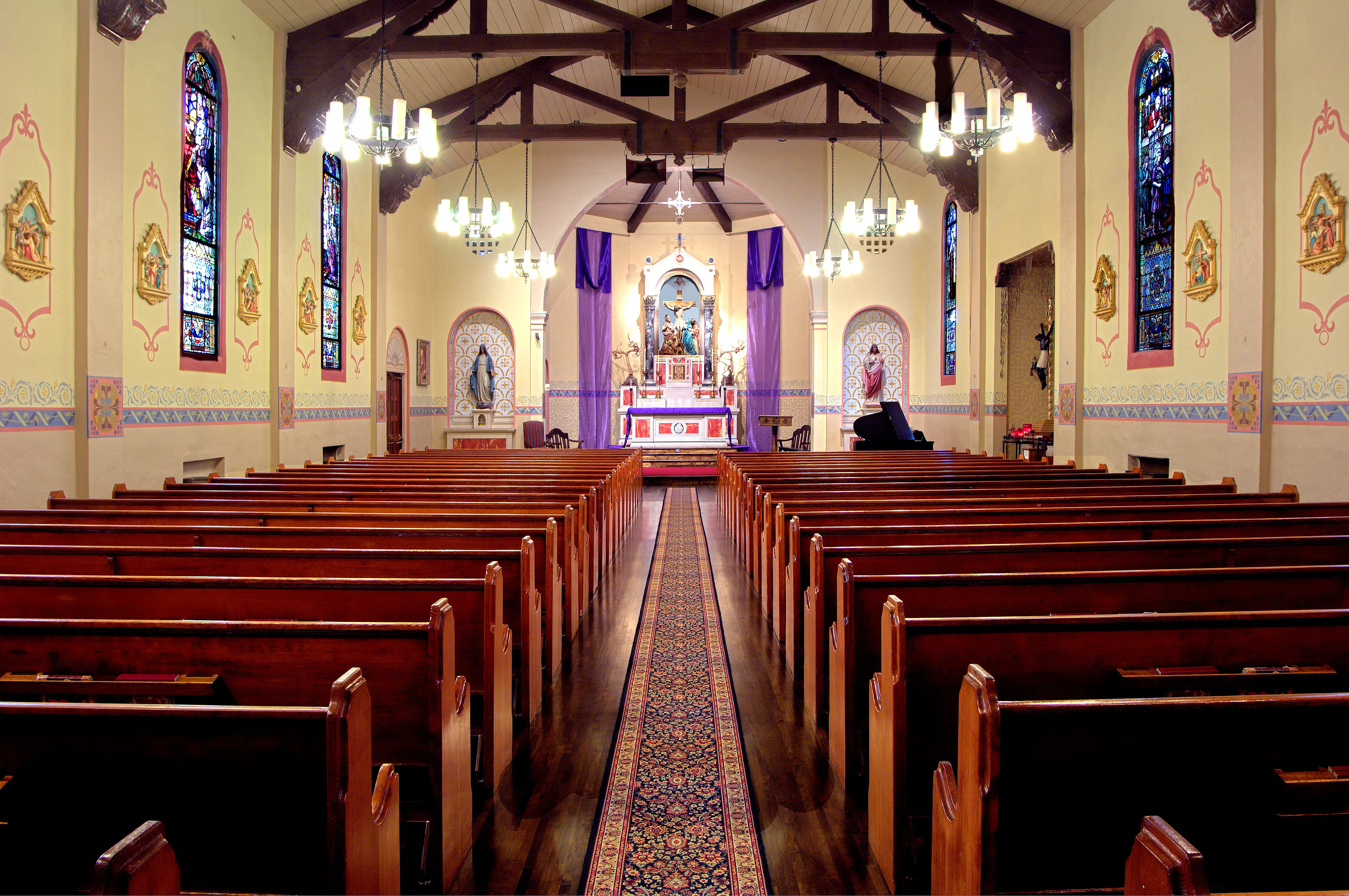
Churches, chapels and public buildings bring a set of constraints that private work does not: liturgical requirements, committee approval, working around a live schedule, and often a historic scheme underneath that must be respected rather than covered.
Because we also work as conservators, we can tell you what is under the current paint before proposing what goes on top of it — and if the original scheme is worth recovering, we will say so.
Common questions
How much does a custom mural cost in Los Angeles?
Most hand-painted murals fall between $30 and $200 per square foot. Detail density, height and access, substrate condition and finish specification move the number far more than area alone. We give a fixed quote after a site visit.
How long does a mural take?
A single residential panel is typically four or five days on site. A room or a ceiling usually runs three to eight weeks including design and cartooning. Sacred and historic work takes longer because investigation precedes painting.
Do you paint on canvas or directly on the wall?
Both. Direct-to-wall gives the best integration with the architecture. Canvas (marouflage) is better when the substrate is unreliable, when the work must be removable, or when most of the painting is better done in the studio.
Can you match or continue an existing historic mural?
Yes. That is conservation work rather than decorative work, and it starts with investigation — see historic restoration.
Which areas do you serve?
Greater Los Angeles, including Pasadena, Beverly Hills, Glendale, Malibu, the San Gabriel Valley and the South Bay. We have also worked further afield for institutional clients.
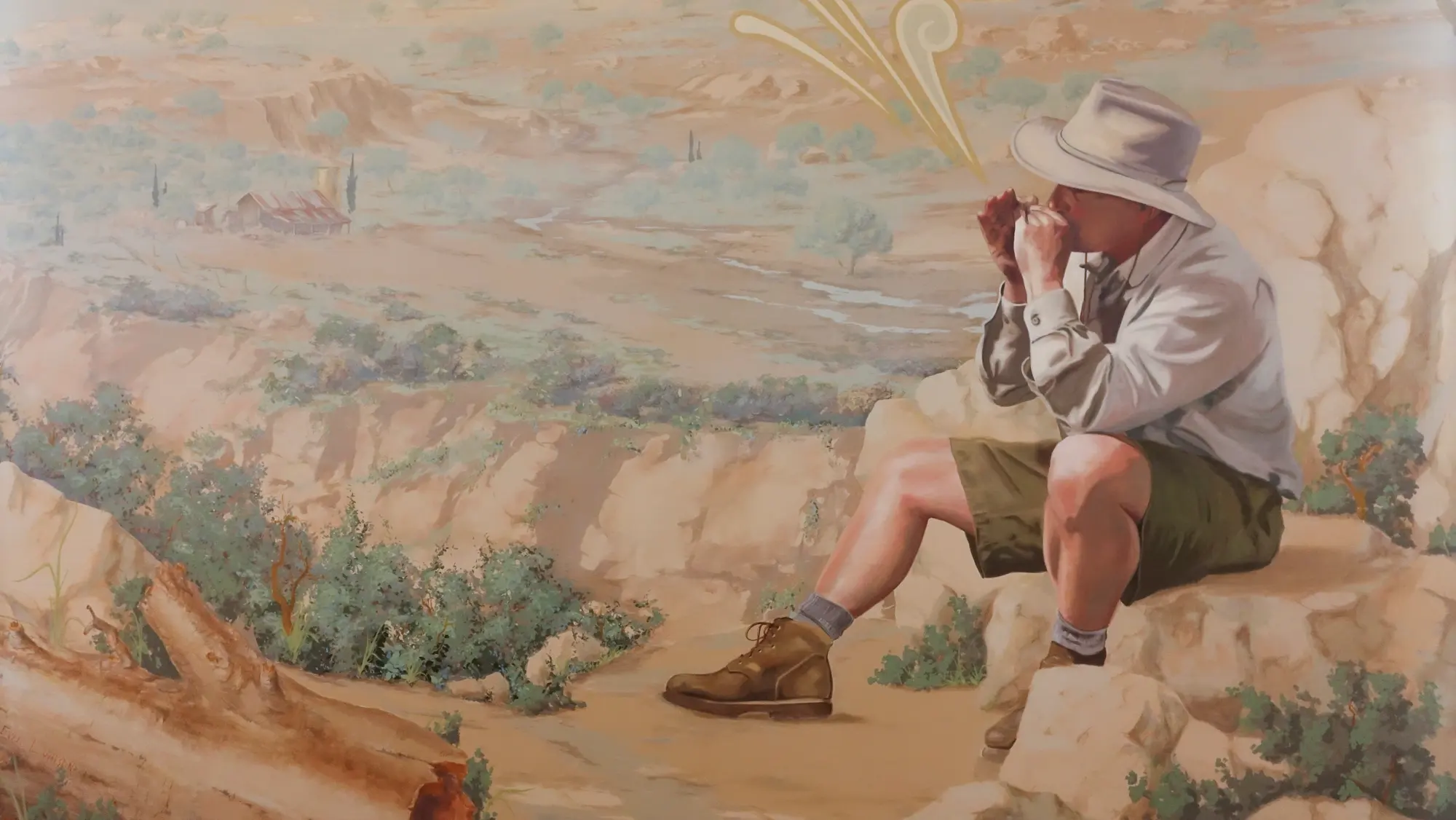
Projects using this work
Related services
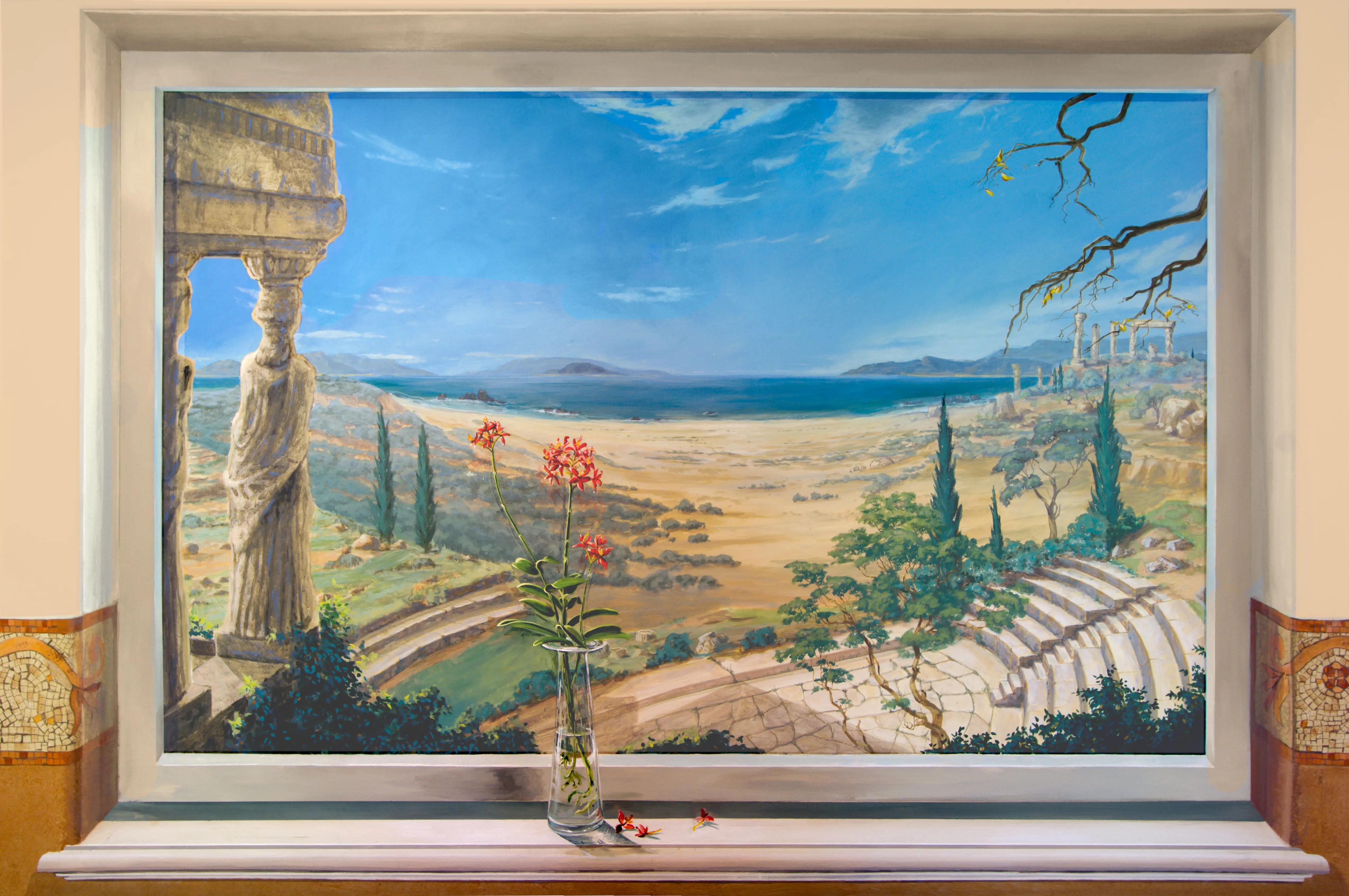
Trompe l'Oeil
Painted architecture, false windows, niches and vistas that read as real from the intended viewing distance.
Decorative Painting, Chinoiserie & Grisaille
Hand-painted ornament, stencilled borders, chinoiserie panels and tonal grisaille for period interiors.
Historic Restoration & Art Conservation
Paint investigation, historic colour designation, consolidation and in-painting for landmark interiors.
Tell us about the room.
Every commission begins with a conversation about the space, the light and what it needs to do. Consultation and site assessment are available for projects across Greater Los Angeles.