Venetian plaster vs. regular plaster: what is the difference?
They are not the same material doing the same job. One is a wall substrate; the other is a finish with two thousand years of history behind it.
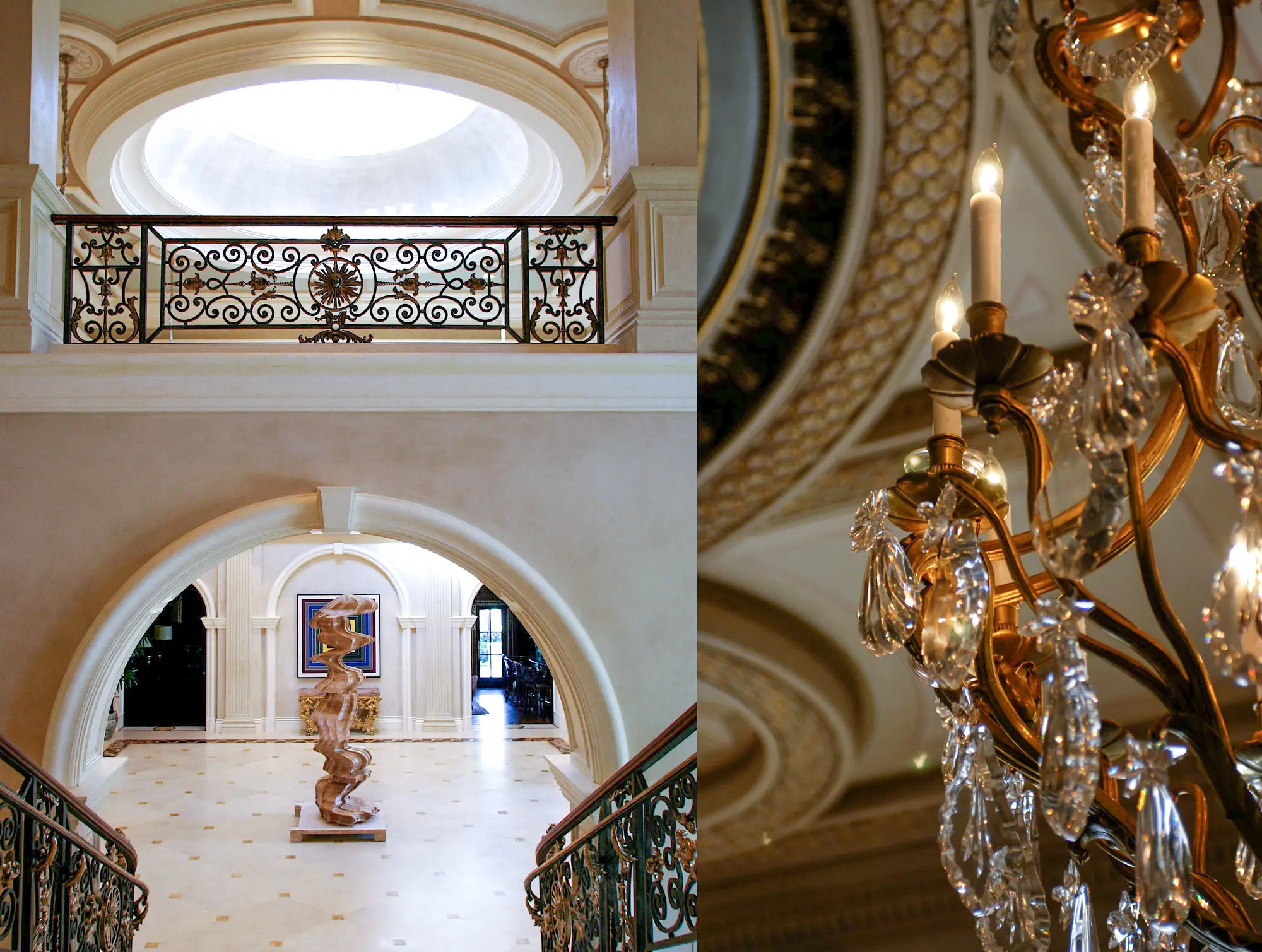
The two things are constantly confused, largely because the word “plaster” is doing two different jobs. Sorting that out makes the rest straightforward.
Regular plaster is a substrate
Conventional plaster — gypsum-based in most modern American construction, cement-based outdoors — is a structural finish material. Its job is to build the wall: to cover masonry or lath, to level it, and to leave a flat, sound surface that something else goes onto.
It is applied thick, typically in two or three coats totalling half an inch or more. It is opaque, it is porous, and it is not the finished surface. It gets painted.
Venetian plaster is a finish
Venetian plaster is slaked lime putty loaded with finely ground marble dust and pigment. It goes on over an already-prepared substrate, in coats so thin they are measured in fractions of a millimetre, applied and compressed with a steel trowel. There may be three of these coats, or seven.
Crucially, the colour is in the material rather than on top of it, and the marble dust makes the set surface slightly translucent. Light enters the finish, scatters within it, and comes back out. That is the entire visual difference between a plastered wall and a painted one, and it is why a lime wall changes through the day while a painted wall does not.
The final coat is burnished — compressed and polished with the trowel as the lime sets — which closes the surface and can take it anywhere from a soft eggshell to a genuine mirror.
So they are not competitors. One is the wall; the other is what the wall wears.
Side by side
| Regular plaster | Venetian plaster | |
|---|---|---|
| Role | Substrate / build-out | Decorative finish |
| Binder | Gypsum or cement | Slaked lime |
| Thickness | 10–20 mm | 0.5–2 mm total |
| Coats | 2–3 | 3–7, each thinner than the last |
| Finished by | Floating, then painting | Burnishing with a trowel |
| Appearance | Opaque, uniform | Translucent, variegated, depth |
| Permeability | Moderate | High — actively breathes |
| Repair | Patch and repaint | Work in and re-polish |
| Typical cost (LA) | $3–$8 / sq ft | $12–$35 / sq ft |
What about “Venetian plaster” in a bucket?
This is where most disappointment originates.
A large share of the product sold as Venetian plaster in the US is an acrylic- or vinyl-bound compound with some marble filler. It trowels on, it takes a sheen, and on day one it can look convincing in photographs.
It is not lime. It is a polymer film. Which means:
- It is not vapour-permeable. It traps moisture behind it, which matters a great deal on masonry and in bathrooms.
- It does not carbonate, so it does not continue to harden. It is as good as it will ever be on the day it dries.
- It cannot self-heal hairline cracks, which lime does through recrystallisation.
- Its depth is printed rather than optical — the variegation is pigment sitting in an opaque film, so it does not change with the light.
- It cannot be repaired invisibly, because you cannot re-burnish a plastic film.
Synthetic products have legitimate uses — over problematic substrates, in rental fit-out, where budget is decisive. But if you are paying for the look of lime, it is worth confirming you are buying lime. Ask what the binder is. A straight answer is a good sign.
Where lime finishes belong
Excellent: entry halls, stair wells, dining rooms, bathrooms and wet rooms, curved and vaulted surfaces, anywhere raking daylight will be doing the work, and over masonry or traditional plaster.
Poor: substrates that move. Unbraced timber-frame partitions, drywall installations still settling, and anything with active moisture ingress from behind. Lime is a mineral surface; it goes where it is put and it does not stretch. On a moving wall it will crack, and no amount of skill in the application prevents that.
Any studio worth hiring will tell you which of these you have before quoting, rather than after.
The case for the cost
Two things justify the difference.
The first is optical, and it has already been described: real translucency, which no opaque coating reproduces because opacity is the whole point of a coating.
The second is time. Lime carbonates slowly — it absorbs atmospheric carbon dioxide and reverts, over years, toward the calcium carbonate it was quarried as. A properly applied lime finish over a sound substrate genuinely gets harder as it ages, and it can be repaired and re-polished indefinitely rather than stripped and redone.
There is lime plaster still on walls in Venice, and in Roman bathhouses, that predates every painted surface in your city by a very long way. That is not a marketing claim; it is just what the material does.
Le Grande Studios applies genuine lime finishes across Los Angeles. Read more about Venetian plaster or request a sample panel.